Pixel Aquarium
On your display
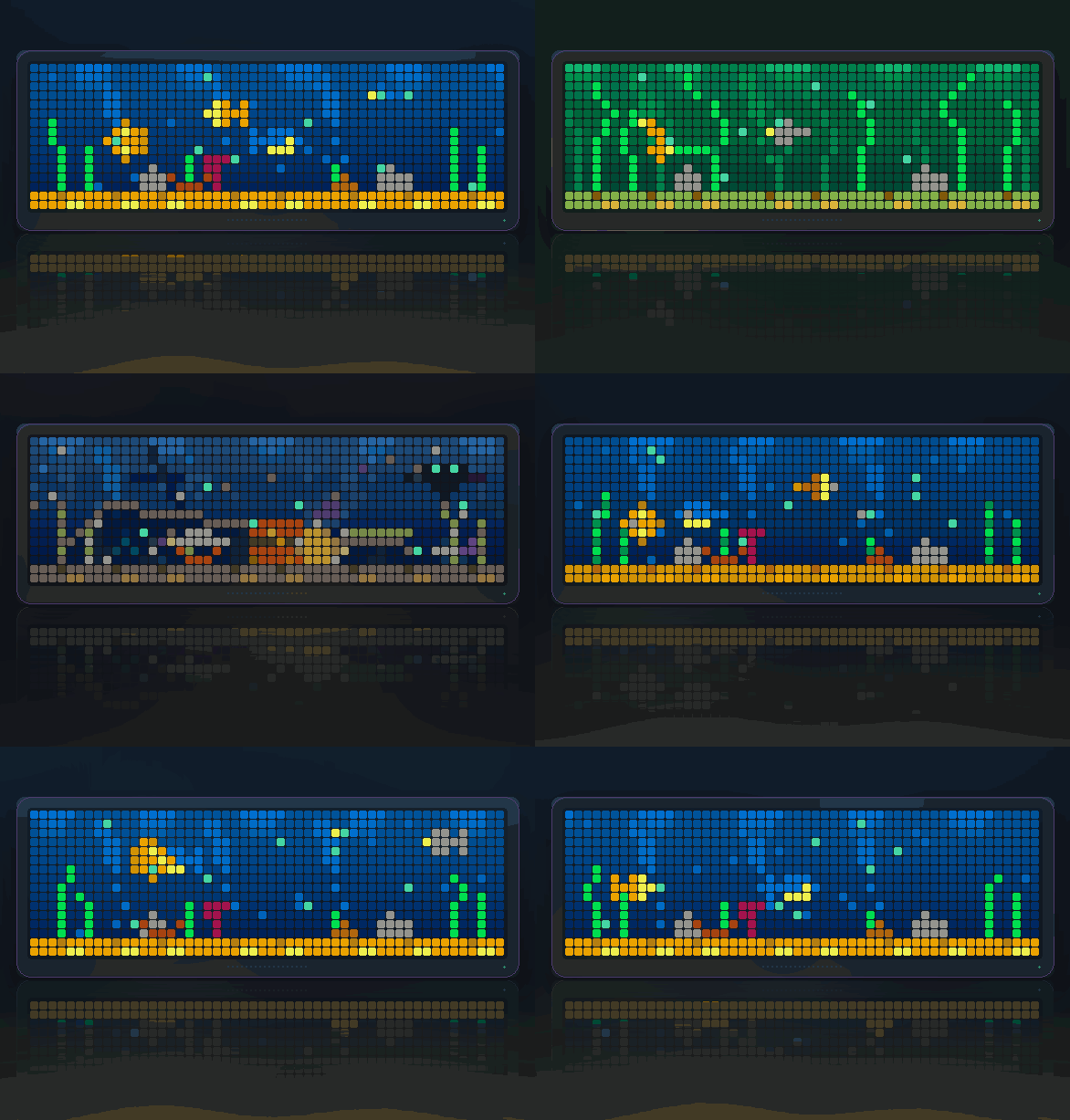
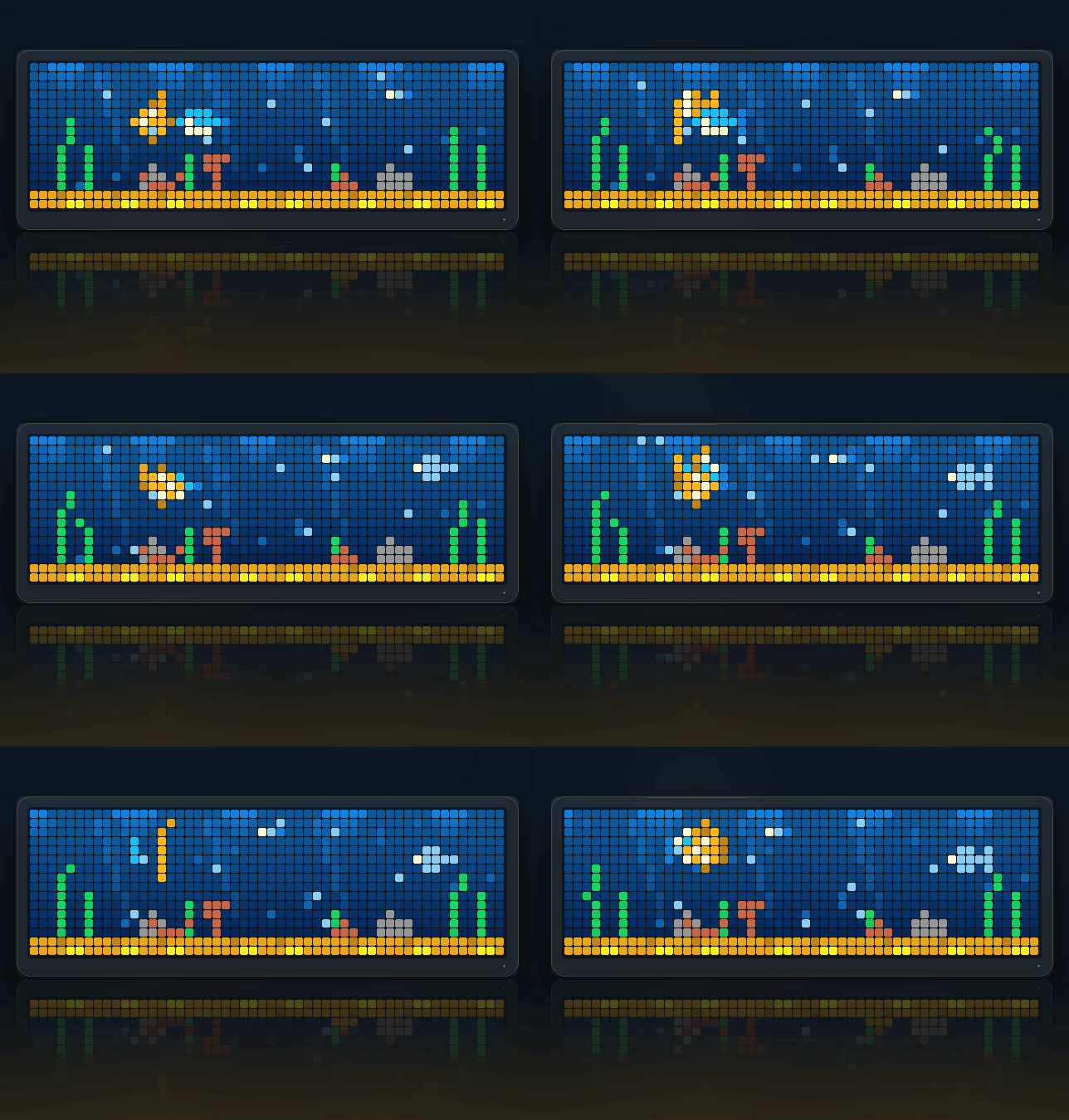
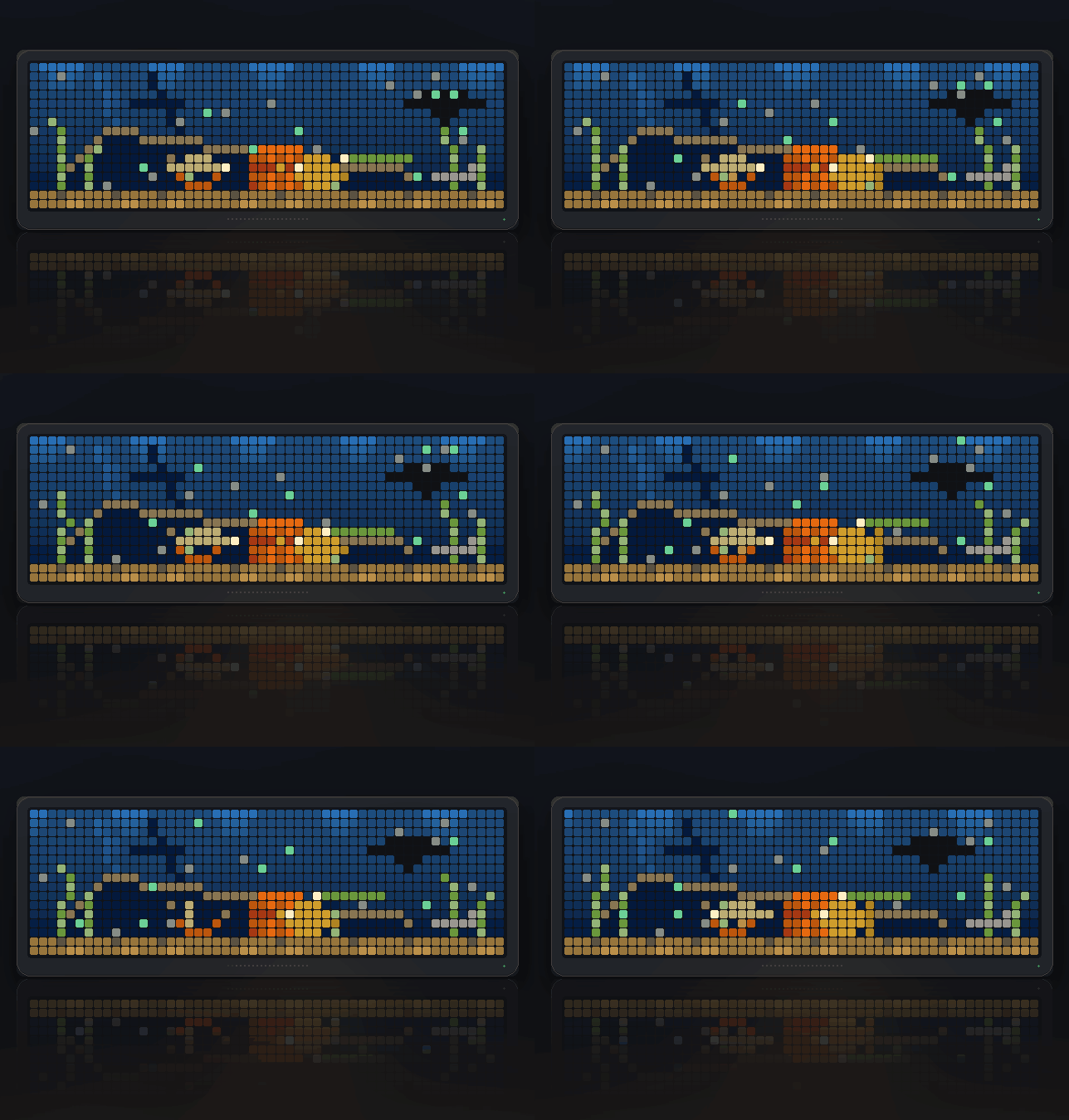
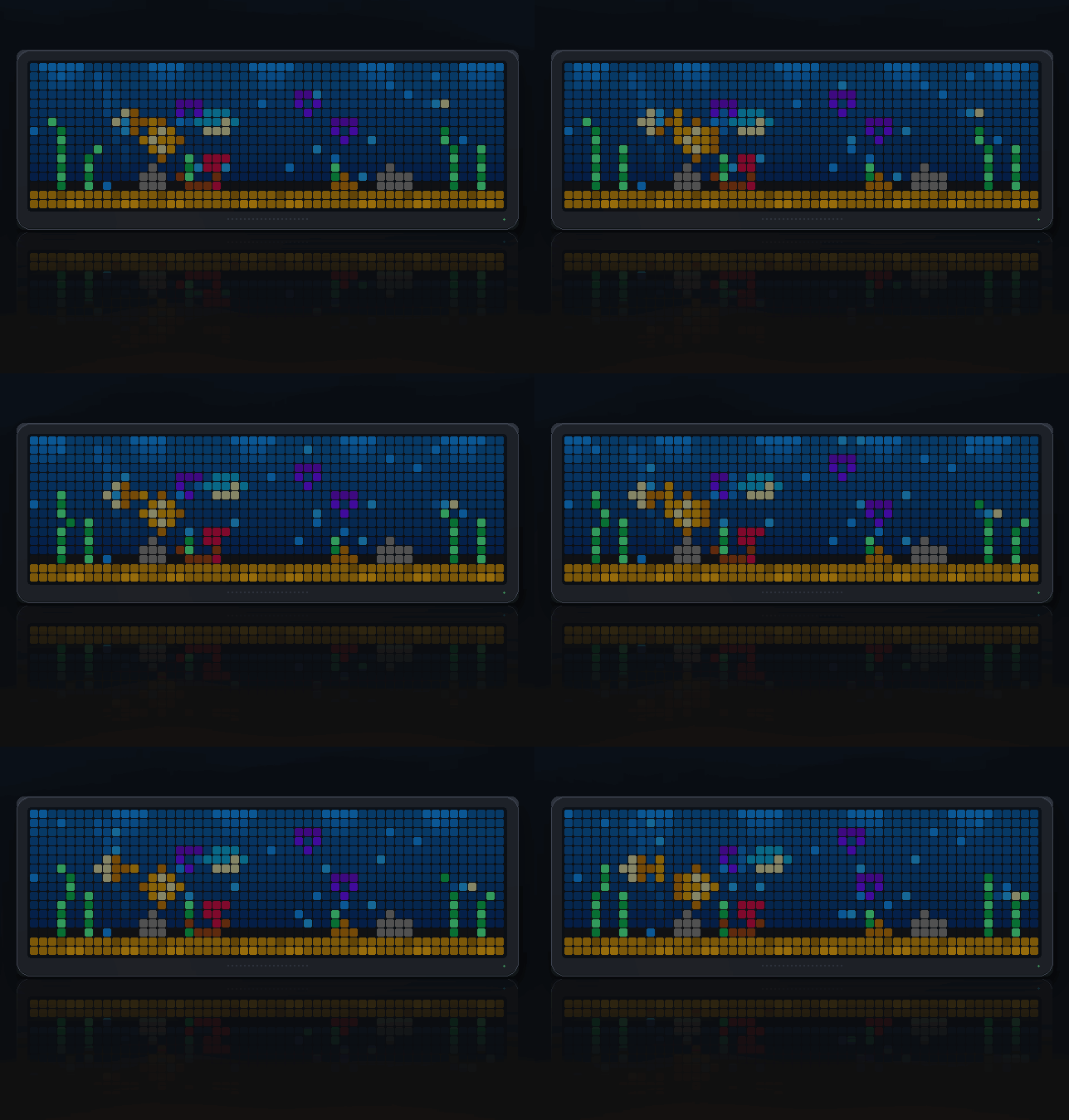
Three fish that glide and turn, swaying weed, light rays, jelly fish, a crab and a chest that opens.
- Topic
- Miscellaneous
- Includes
- Script
Runs on
- Runs on 32×8 (TC001 & DIY) 32×8 (TC001 & DIY) version
- Runs on 52×16 (TC002)
- Does not run on 32×8 with AWTRIX 3 (TC001 & DIY) Made for AWTRIX NG.
Choose your display in the next step.
Script description
Pixel Aquarium
One ocean seen through four windows. Pan between a reef, a kelp forest, a flooded cave and a wreck — each with its own fish — and the tank keeps living while you are not watching.
Panels: 52x16 and 32x8 — but they are not the same tank, see below · Needs: nothing, no account, no network
Four biomes, not four backdrops
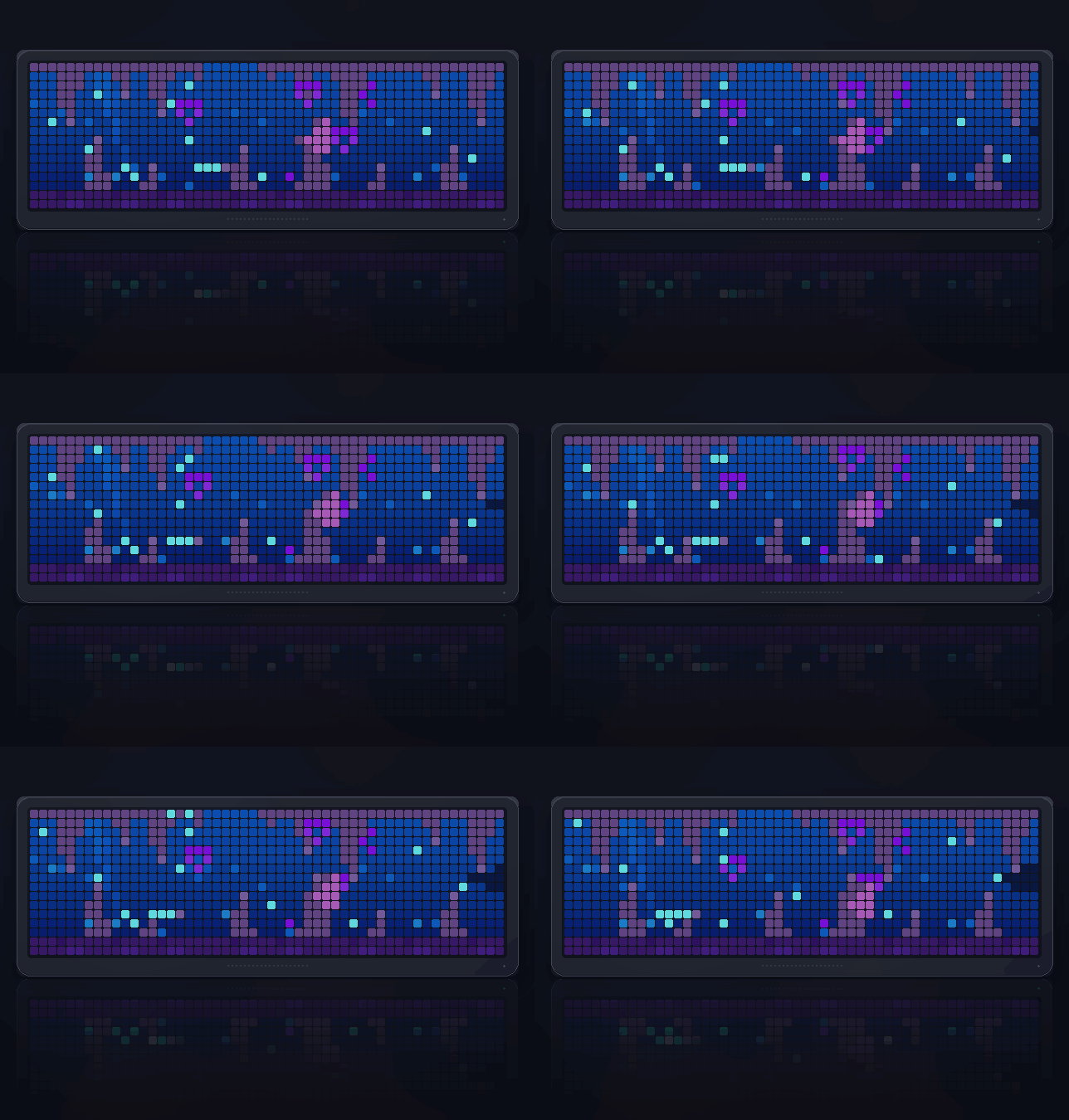
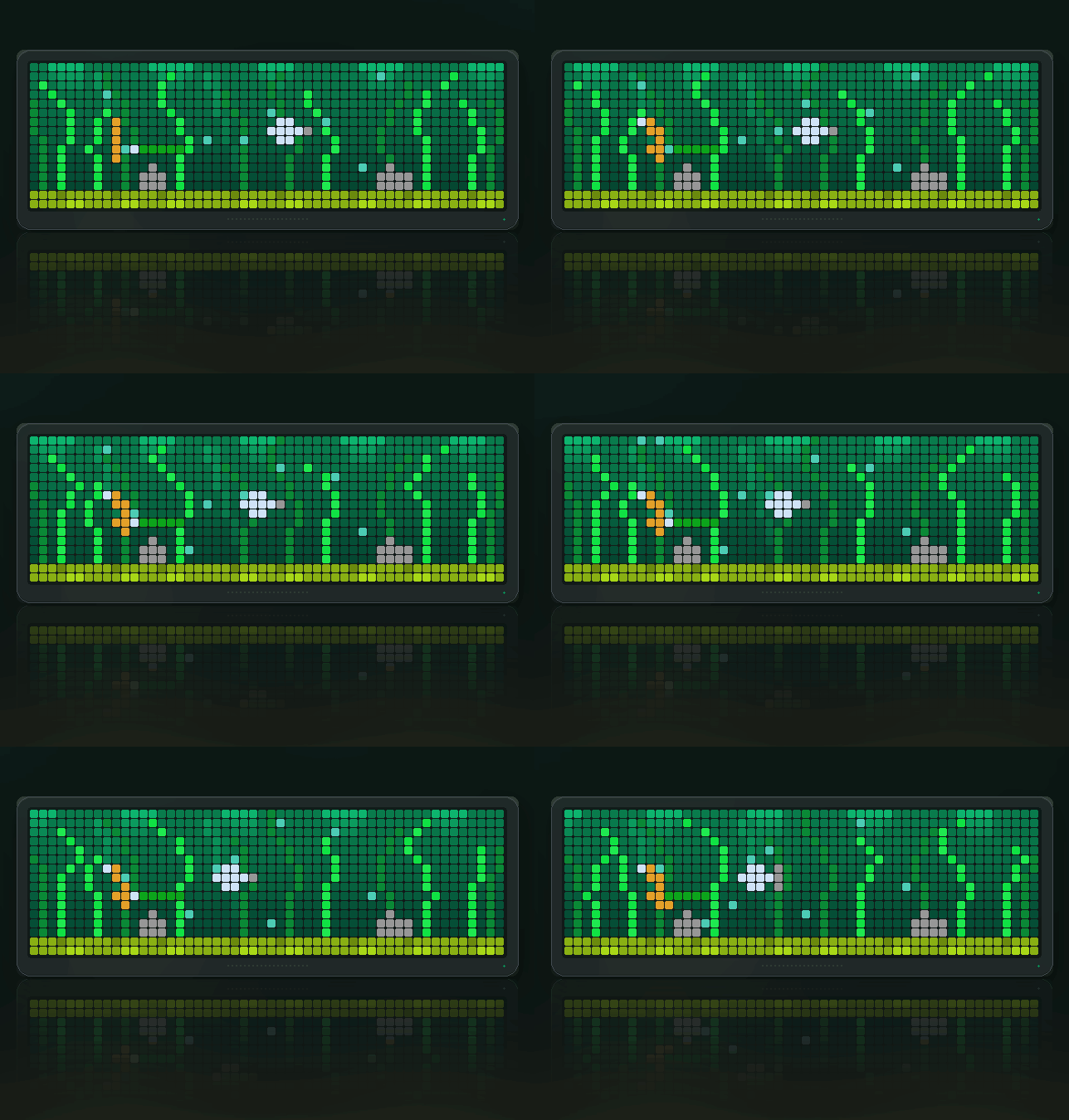
SELECT swims to the next one. They sit in a ring — reef → kelp → dark → wreck → reef — and each has its own water, bed, planting and, more to the point, its own residents:
- Reef — clownfish, blue tang, angelfish, pufferfish, shrimp, coral, a crab and three shafts of sunlight
- Kelp — a forest tall enough to reach most of the water column, with pipefish, silversides, a seahorse and triggerfish
- Dark — a flooded cave: pale limestone ceiling and stalactites over water running teal at the roof to violet at the floor, a shaft of light through a gap in the rock, crystals pulsing cyan and magenta, glowing weed, and an anglerfish whose lure actually pulses, with lanternfish, squid and jellyfish
- Wreck — a ship lying tilted in the silt with its bow up and its mast snapped, the chest that opens every fifteen seconds, a grouper, a moray and a ray along the bottom
Something big in the haze
Something large passes behind everything now and then, drawn darker than the
water it moves through rather than as another fish. There are five — a shark,
a ray, a whale, a turtle and a shoal — and each biome draws from three of
them, so it is not the same shape every time.
Behind that there is a layer of movement per biome: plankton drifting on the
reef, a second rank of darker fronds swaying at its own rate in the kelp,
motes drifting through the shaft in the dark, silt drifting past the hull in the
wreck. One tank used to have more going on in its background than four biomes
did, which was the wrong way round.
It keeps living while you are not watching
This is the part that changed most. The old build ran its whole life cycle from draw(), which only runs while the app is on screen — so breeding advanced for about fifteen seconds per rotation and, in practice, nothing ever happened.
Now the ocean runs in loop(), once a second, on screen or not. Fry grow up, fish migrate, and the tank you come back to is not the one you left.
And it survives a reboot. The population is kept in the device's own store, three characters a fish, so a power cut no longer wipes it. A progression system with no memory is just a screensaver.
Only the small fish travel
The first build let everything roam and it put a grouper over the coral and an anglerfish in full sunlight. These four biomes are far enough apart that most species belong to exactly one, so a visitor read as a bug rather than as ecology.
So the silversides and the tiddlers wander between biomes and everything else stays home. The bar is colour as much as size: the blue tang roamed at first, and a bright reef fish in the kelp looked exactly as wrong as the grouper had. A wanderer leaving through the glass arrives at the far edge of the next biome along a moment later — and food is what pulls them across, which is the one lever you have over where the ocean gathers.
One button does everything
SELECT is the only button this app takes. LEFT and RIGHT are never
consumed, so the carousel always works — an app that eats them leaves no way
out but the device menu.
| SELECT once | Swims to the next biome |
| SELECT twice, quickly | Drops food — and deliberately does not pan |
A press is not acted on the instant it lands. The app waits 450 ms to see
whether a second one follows, which is what lets one button mean two things.
Both top corners light up the moment you press, so the wait reads as
acknowledgement rather than lag.
The cost, stated plainly: panning two biomes along needs two deliberate
presses with a beat between them rather than a quick double-tap. With four
biomes that is at most three presses.
A fed fish may spawn a fry, which takes about ten minutes of real time to
grow through two stages into its parent's species. Only species native to that
biome are ever born there.
It also breeds on its own
Nothing here dies, so the tank cannot empty — but without this it could only
ever grow when somebody pressed a button, and coming back after a week to an
identical tank is the thing persistence was meant to fix.
So a settled biome breeds slowly by itself: roughly one new fish every twenty
minutes somewhere in the ocean, provided that biome is under its cap and
already holds two grown fish. Feeding is far faster, which keeps it worth
doing.
Dusk actually happens
The light is interpolated rather than switched: full day until seven in the evening, then three hours fading to full night, and three hours back at dawn. The old build flipped palettes outright at 22:00 and 07:00.
Measured at eight in the evening the reef renders a third of the way to night — which is the difference between a tank that has a time of day and one that has two states.
Settings
| Starting fish (8) | Three to twelve. Breeding grows it from there, up to four or five a biome |
| Small fish roam (on) | Silversides and tiddlers cross between biomes; everything else stays home |
| Breeding (on) | Fed fish lay eggs, and a settled biome slowly breeds on its own |
| Dim with the clock (on) | Off keeps it permanently daylit |
| Sound (off) | A short cue when food goes in and when an egg hatches — and never while the app is off screen |
Sign in to view and copy the code of this script.
Discussion 6
Ask a question, suggest a change or share how you use it.
Newest first
More scripts in Miscellaneous
Something wrong with this script? Report it.
Have an idea?
Sign in to ask questions and join the conversation.